

Overview: The World’s Most Famous Megafauna Gathering
Designated as a UNESCO Biosphere Reserve in 2011, Baa Atoll in the central-western Maldives (Asia & Indian Ocean ) is internationally celebrated as a marine ecosystem of global ecological significance. Covering over 139,000 hectares of pristine coral reefs, submerged seamounts (thilas), and open ocean channels, Baa Atoll harbors extraordinary biodiversity, including the planet’s largest known aggregations of Reef Manta Rays (Mobula alfredi) and a remarkably dense resident population of Hawksbill Turtles (Eretmochelys imbricata) and Green Sea Turtles (Chelonia mydas) . Along with Kuredu Caves in neighboring Lhaviyani Atoll, it is the Maldives’ leading chelonian sanctuary.
The crown jewel of Baa Atoll is Hanifaru Bay—a small, funnel-shaped reef cul-de-sac no larger than a football field. Between May and November, the Southwest Monsoon (Hulhangu) drives powerful oceanic currents that push massive concentrations of nutrient-rich zooplankton into the narrow mouth of the bay, trapping it against the inner reef walls.
                   SOUTHWEST MONSOON TIDAL CURRENT (Plankton Surge)
                                    │  │  │
                                    ▼  ▼  ▼
       ┌─────────────────────────────────────────────────────────────┐
       │             HANAFARU BAY CORE BIOSPHERE ZONE                │
       │                                                             │
       │     [ Outer Coral Wall & Drop-Off ]   [ The Plankton Funnel ]│
       │   ═════════════════════════════════   ░░░░░░░░░░░░░░░░░░░░░  │
       │   (Hawksbills Feeding on Sponges)     (100+ Mantas & Sharks) │
       │                                                             │
       │            [ Shallow Inner Fringing Coral Garden ]          │
       │            vvvvvvvvvvvvvvvvvvvvvvvvvvvvvvvvvvvvvvv          │
       │            (Green Turtles Grazing in 1.5m - 4.0m Water)     │
       │                                                             │
       │   ───────────────────────────────────────────────────────   │
       │             Hanifaru Uninhabited Island Sandy Spit          │
       └─────────────────────────────────────────────────────────────┘
This phenomenon triggers one of the most breathtaking wildlife spectacles on Earth: hundreds of giant manta rays and whale sharks perform synchronized “cyclone feeding” maneuvers, while wild Hawksbill and Green sea turtles feed actively along the coral edges and cruise calmly right through the swirling manta vortex.
To prevent ecological degradation, the Maldivian Environmental Protection Agency (EPA) and the Baa Atoll UNESCO Reserve Management enforce strict operational protocols: SCUBA diving is completely banned inside Hanifaru Bay (snorkeling only), motorized boat traffic is strictly regulated, and every visitor must be accompanied by a certified Biosphere Guide.

Baa Atoll: Hanifaru Bay Manta & Sea Turtle Snorkel Safari
Official guided boat safari into Hanifaru Bay with certified Biosphere guide. Includes UNESCO permit token, snorkel gear, and encounters with wild turtles and manta rays.
Marine Biology & Foraging Ecology in Baa Atoll
The exceptional biodiversity of Baa Atoll is rooted in the rich interplay between deep-sea upwelling, coral reefs, and sheltered lagoon nurseries:
  SURFACE (Snorkeler with Lifejacket & Biosphere Guide) ~~~~~~~~~~~~~~~~~~~~~~~~~~~~
                                                        │ (3-Meter Mandatory Buffer)
                                                        ▼
  HANIFARU PLANKTON COLUMN & CORAL RIM                 🐢 [Eretmochelys imbricata / Chelonia mydas]
  (Depth: 1.5m - 6.0m)                                   │ Foraging on sponges & coral polyps
                                                        ▼
  BENTHIC PORITES & ACROPORA REEF                      vvvvvvvvvvvvvvvvvvvvvvvvvvvvvvvvvvvvvvvvvv
                                                       Porites lutea, Pocillopora verrucosa
                                                       Spheciospongia & Halophila ovalis
1. The Hawksbill Sea Turtle (Eretmochelys imbricata) Spongivores
Hawksbills are the most abundant sea turtle species encountered along the coral ridges and reef walls of Baa Atoll. With their narrow, pointed beaks and overlapping scutes, Hawksbills hunt among colonies of Cauliflower Coral (Pocillopora verrucosa), Pore Coral (Porites lutea), and Table Acropora.
They specialize in consuming encrusting demosponges (Spheciospongia and Callyspongia). In doing so, Hawksbills control sponge proliferation, preventing aggressive sponges from overgrowing the slow-growing calcium carbonate reef framework.
2. The Green Sea Turtles (Chelonia mydas) of Dhigufaru & Dharavandhoo
In the sheltered, sunlit lagoons surrounding Dharavandhoo and Dhigufaru, Green sea turtles graze on lush beds of Paddle Grass (Halophila ovalis) and marine macroalgae. Green turtles spend several hours each morning cropping the seagrass blades, keeping the meadows oxygenated and healthy.
Symbiotic Cleaning Stations & The Megafauna Web
Throughout Baa Atoll’s famous thilas (such as Dhonfanu Thila and Nelivaru Thila), large coral bommies serve as active cleaning stations. Here, Bluestreak Cleaner Wrasses (Labroides dimidiatus) and Moon Wrasses (Thalassoma lunare) inspect and clean both resting sea turtles and hovering Reef Manta Rays (Mobula alfredi).
Other iconic marine life in Baa Atoll:
- Whale Sharks (Rhincodon typus): Massive pelagic filter-feeders that regularly enter Hanifaru Bay alongside manta rays.
- Reef Predators: Grey Reef Sharks (Carcharhinus amblyrhynchos), Whitetip Reef Sharks (Triaenodon obesus), and giant Napoleon Wrasses (Cheilinus undulatus).
Detailed Bathymetry, Reef Zones & Snorkel Swim Routes
WEST (Hanifaru Bay Inner)            CENTER (Reef Ridge)                    EAST (Outer Atoll Drop-Off)
[ Shallow Plankton Basin ]         [ Coral Crest & Cleaning Bommies ]     [ Deep Pelagic Wall ]
     Depth 1.5-4.0m                        Depth 2.5-8.0m                         Depth 10.0-35.0m
           │                                      │                                      │
        ░░░░░░░                                ════════                               ════════
 (Manta Cyclone & Turtles)              (Hawksbills & Wrasses)                 (Sharks & Eagle Rays)
                  HANIFARU BAY GUIDED SNORKEL SWIM ROUTE

  [ UNESCO Ranger Checkpoint / Boat Mooring ]
          │  Boat engine turned off; meet assigned Biosphere guide
          ▼
  [ Bay Entrance Shallows (2.0m - 4.0m) ]  --> Put on fins; slip quietly into water
          │  Swim gently toward the inner reef cul-de-sac
          ▼
  [ Core Feeding Basin (1.5m - 3.5m) ]    --> Swirling Manta Rays & Foraging Sea Turtles 🐢
          │  Float horizontally; strictly observe 3-meter mandatory buffer
          ▼
  [ Outer Coral Wall & Cleaning Station (4.0m - 8.0m) ] --> Hawksbills Grazing on Sponges
          │  45-minute maximum session expires; guide signals group
          ▼
  [ Boarding Boat Tender at Outer Perimeter ]
1. Hanifaru Bay Core Basin (Depth: 1.5 to 4.0 meters)
- Characteristics: Shallow, enclosed lagoon cul-de-sac where plankton accumulates.
- Wildlife Encounter: The world’s premier megafauna interaction. Watch dozens of manta rays, occasional whale sharks, and wild Hawksbill turtles feeding together in clear, sun-drenched shallow water.
2. Dharavandhoo & Dhigufaru House Reefs (Depth: 1.0 to 6.0 meters)
- Characteristics: Sheltered, calm fringing reefs accessible directly from local island guesthouses and luxury resorts.
- Wildlife Encounter: Prime morning foraging habitat for juvenile and adult Green sea turtles feeding on seagrass and algae.
3. Dhonfanu & Nelivaru Thilas (Depth: 5.0 to 25.0 meters)
- Characteristics: Submerged underwater pinnacles covered in soft corals and sea fans.
- Wildlife Encounter: World-class scuba diving and deep freediving with Hawksbills, schooling trevallies, eagle rays, and whitetip reef sharks.
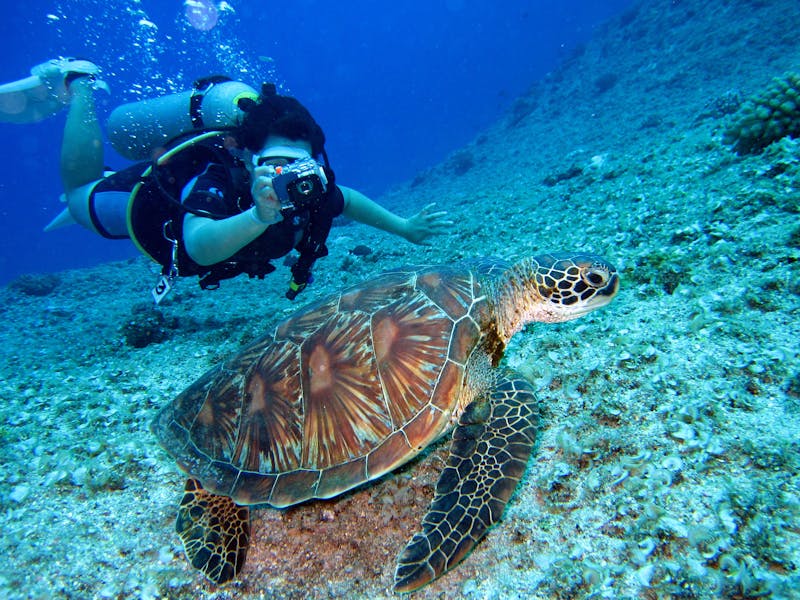
Baa Atoll Private Speedboat Safari: Turtles, Mantas & Sandbank
Private speedboat charter covering Hanifaru Bay, Dhonfanu reef turtles, deserted sandbank lunch, and private marine biologist guide.
Baa Atoll UNESCO Regulations, Marine Laws & Fines
Conservation in Baa Atoll is legally enforced under the Environmental Protection and Preservation Act of Maldives (Law No. 4/93) and the Hanifaru Bay Management Plan:
Baa Atoll UNESCO Biosphere Reserve Regulations (recorded by SWOT ):
- SCUBA Diving Strictly Prohibited: To prevent bubble disturbance and diver congestion, SCUBA diving is completely banned inside Hanifaru Bay. Only surface snorkeling and freediving are permitted.
- Mandatory Biosphere Guide & Entry Token: Every vessel entering Hanifaru Bay must purchase an official government entry token (approx. $30.00 USD per person) and be accompanied by a certified Baa Atoll Biosphere Guide.
- Timed 45-Minute Session Limit: Snorkeling groups are limited to a maximum 45-minute timed rotation inside the bay to minimize wildlife stress.
- 3-Meter Mandatory Standoff Buffer: Touching, chasing, riding, or crowding sea turtles, manta rays, or whale sharks is strictly illegal. Violators face immediate expulsion and fines of up to 100,000 MVR (~$6,500 USD).
- Engine Cut-Off Mandate: Motorized boat engines must be turned off outside the bay entrance; tenders must use oars or electric propulsion within the core perimeter.
Seasonality, Water Temperatures & Monsoon Windows
Month:      Jan  Feb  Mar  Apr  May  Jun  Jul  Aug  Sep  Oct  Nov  Dec
Sighting:  [==== High 90% ====] [======== Peak Season 99% ========] [== High 90% ==]
Conditions: Iruvai Dry (Reef Clarity)  Hulhangu Monsoon (Plankton & Mantas) Iruvai Dry
Water Temp: 28°C 28°C 29°C 29°C 30°C 29°C 28°C 28°C 28°C 28°C 29°C 28°C
Visibility:  30m  30m  35m  35m  20m  15m  15m  15m  18m  20m  25m  30m
- Southwest Monsoon (May through November): The world-famous Hanifaru Megafauna Season. Strong oceanic currents push immense plankton blooms into the bay, drawing hundreds of manta rays, whale sharks, and foraging sea turtles. Water temperatures average 28°C to 30°C.
- Northeast Monsoon (December through April): The Crystal Clarity Season. Plankton levels drop, but horizontal underwater visibility surges to 30–35+ meters. This is the optimal season for exploring Baa Atoll’s outer coral walls, deep thilas, and resident Green sea turtle seagrass pastures in glassy, turquoise conditions.
Complete Logistics: How to Get to Baa Atoll
[ International Flight to Malé (MLE) ]
                  │
   Domestic Flight (20 min) OR Direct Seaplane (35 min)
                  ▼
[ Dharavandhoo Domestic Airport (DRV) ] / [ Resort Water Jetty ]
                  │
         Speedboat (10-15 min)
                  ▼
      [ HANIFARU BAY BIOSPHERE ]
1. Option A: Domestic Flight to Dharavandhoo (Budget & Flexible)
- From Velana International Airport (MLE) in Malé, board a 20-minute domestic flight on Manta Air or Flyme to Dharavandhoo Airport (DRV) in Baa Atoll.
- Dharavandhoo is a local Maldivian island with charming guesthouses, PADI dive shops, and the closest harbor to Hanifaru Bay (just a 5-minute boat ride away).
2. Option B: Direct Seaplane to Luxury Resorts
- If staying at luxury resorts such as Four Seasons Landaa Giraavaru, Amilla Maldives, Anantara Kihavah, or Dusit Thani, take a scenic 35-minute seaplane flight directly from the Malé Seaplane Terminal to the resort’s private water jetty.
Realistic Pricing Benchmarks & Verified Local Operators
| Service / Item | USD ($) | Notes / Inclusions |
|---|---|---|
| Hanifaru Bay UNESCO Entry Token | $30.00 | Mandatory government conservation pass |
| Shared Hanifaru Snorkel Excursion (from Dharavandhoo) | $85.00 – $110.00 | 2.5 hours, includes boat, guide, token & gear (including panoramic mask ) |
| Resort Hanifaru Snorkel Excursion (Luxury Resort) | $175.00 – $250.00 | Includes marine biologist guide & luxury dhoni |
| Private Speedboat Charter (Half Day) | $600.00 – $850.00 | Up to 6 pax; custom timing & sandbank stop |
| Guided 2-Tank Scuba Dive (Outer Baa Atoll Reefs) | $120.00 – $160.00 | Boat dive with tank, weights, guide & gear |
Verified Local PADI 5-Star Operators
- Liquid Salt Divers Dharavandhoo
- Accreditation: PADI 5-Star Dive Center #25494
- Website: https://liquidsaltdivers.com | Email: info@liquidsaltdivers.com | Phone: +960 790 0980
- Location: Dharavandhoo Island, Baa Atoll 06060
- Highlights: Premier local island dive center located 5 minutes from Hanifaru Bay. Experienced local captains, on-site marine biologists, and daily UNESCO permit excursions.
- Four Seasons Marine Discovery Centre (Landaa Giraavaru)
- Accreditation: Official UNESCO Research Partner & PADI 5-Star Resort
- Website: https://www.fourseasons.com/maldiveslg | Email: mdc.maldives@fourseasons.com | Phone: +960 660 0888
- Location: Landaa Giraavaru Island, Baa Atoll
- Highlights: World-renowned marine conservation center leading the Maldivian Sea Turtle Rehabilitation program and Manta Trust research.
- Dharavandhoo Divers
- Accreditation: PADI Dive Resort #26118
- Website: https://dharavandhoodivers.com | Email: dive@dharavandhoodivers.com | Phone: +960 778 4321
- Location: Dharavandhoo Harbor Front
- Highlights: Dedicated budget-friendly outfitter offering high-quality rental equipment and ethical small-group snorkeling trips into Hanifaru Bay.
Responsible Snorkeling & Wildlife Etiquette
                    RESPONSIBLE HANIFARU ENCOUNTER PROTOCOLS

     Snorkeler Floating Silently on Surface (Wearing Lifejacket)
     ~~~~~~~~~~~~~~~~~~~~~~~~~~~~~~~~~~~~~~~~~~~~~~~~~~~~~~~~~~
                                  │
                                  │  3 METERS (10 FEET) MINIMUM BUFFER
                                  │  NO TOUCHING / NO FLUID MOTORING
                                  ▼
                       🐢 [Hawksbill Sea Turtle]
                                  │
                                  ▼
      [ Coral Cleaning Bommies & Plankton Stream ] ══════════════
- Do Not Touch, Chase, or Restrain Any Animal: Physical contact transfers harmful pathogens and disrupts natural feeding behavior.
- Never Dive Down Directly into a Manta or Turtle Feeding Train: Stay on the surface and allow the animals to glide beneath and around you.
- No Flash or Underwater Strobes: Electronic strobes startle megafauna and are strictly banned inside the UNESCO reserve.
- Listen to Your Biosphere Guide: Guides coordinate with government rangers on VHF radio to ensure peaceful, uncrowded wildlife encounters.
Red Flags & What to Avoid at Baa Atoll
Red Flags & What to Avoid at Hanifaru Bay & Baa Atoll UNESCO Biosphere Reserve
Independent critique, common tourist traps, and local marine compliance advisories.
At Hanifaru Bay & Baa Atoll UNESCO Biosphere Reserve, underwater clarity is highest during Tidal flow dependant (09:00-15:00) (15–35m). By late morning, coastal winds kick up chop and tourist activity stirs bottom sediments, cutting visibility significantly. Resident sea turtles typically retreat to deeper resting ledges once human traffic peaks.
Reaching Hanifaru Bay & Baa Atoll UNESCO Biosphere Reserve requires vessel transit. Avoid booking unregulated freelance boats that lack emergency marine VHF radios, licensed skippers, lifejackets, and insurance. Only book vetted operators with certified guides to ensure safe mooring and eco-compliant operations.
Wild sea turtles at Hanifaru Bay & Baa Atoll UNESCO Biosphere Reserve are protected by national marine sanctuaries. Motorized boat engines must be turned off at bay perimeter; zero anchoring on coral reefs. Touching, cornering, riding, or feeding turtles carries severe statutory wildlife fines, immediate park ejection, and potential legal prosecution under Maldives conservation laws.
Chemical sunscreens containing oxybenzone, octinoxate, and octocrylene poison fragile coral polyps and marine turtle nursery habitats. Use exclusively certified 100% non-nano zinc oxide mineral sunscreens or wear UPF 50+ rashguards to prevent sunscreen wash-off in the protected reef zone.
Frequently Asked Questions & Direct Choice Field Guide
Guided Tour vs Independent Shore Snorkeling in Baa Atoll — Which should you book?
Book a guided excursion (from $380 USD) if you want guaranteed encounters, boat access to outer reefs, certified safety skippers, and high-quality snorkel gear; choose independent shore snorkeling ($30.00 USD) only if you are an experienced ocean swimmer equipped with your own reef-safe mineral sunscreen and comfortable navigating local shore breaks and current corridors.
Guided tours provide dedicated spotters who know current turtle feeding clusters, whereas independent snorkelers often waste hours searching murky shallows.
Early Morning vs Midday Snorkeling — When is turtle sighting probability highest?
Go during Tidal flow dependant (09:00-15:00), which delivers an optimal 95% sighting probability and crystal 15–35m underwater visibility before offshore trade winds churn bottom sediments and tourist crowds arrive.
After 11:00 AM, heavy boat traffic and hundreds of recreational swimmers stir up fine silt, reducing underwater clarity by up to 50% and driving grazing turtles into deeper offshore trenches.
Peak Season (May, June, July) vs Shoulder Months — When are water conditions best?
Visit during May, June, July for peak feeding activity, minimal rainfall, and warm sea temperatures ranging from 27°C to 30°C.
While resident sea turtles inhabit Baa Atoll year-round, booking morning excursions during peak months ensures calm surface conditions, though reserving tour slots 2–3 weeks ahead is essential to avoid sold-out capacity limits.
What are the statutory wildlife distance rules and legal penalties in Maldives?
Swimmers must maintain a strict minimum 3-meter (10-foot) buffer from all sea turtles at all times under Maldives marine conservation laws.
Touching, riding, pursuing, or cornering a turtle is a serious wildlife violation carrying steep statutory fines, immediate ejection from the marine sanctuary, and potential criminal prosecution. Always float neutrally with your arms crossed across your chest and allow turtles an unobstructed 45-degree surfacing corridor to breathe.
Where do Baa Atoll turtle tours depart from, and how do you reach the reef?
Most verified excursions depart directly from local harbor docks or designated beach kiosks near DRV airport, with reef access centered around GPS coordinates 5.1719, 73.1486.
If traveling independently by rental car or taxi, arrive at least 30 minutes before your scheduled departure to secure parking and complete mandatory marine sanctuary registration.