Overview: The Maldives’ Largest Sea Turtle Sanctuary
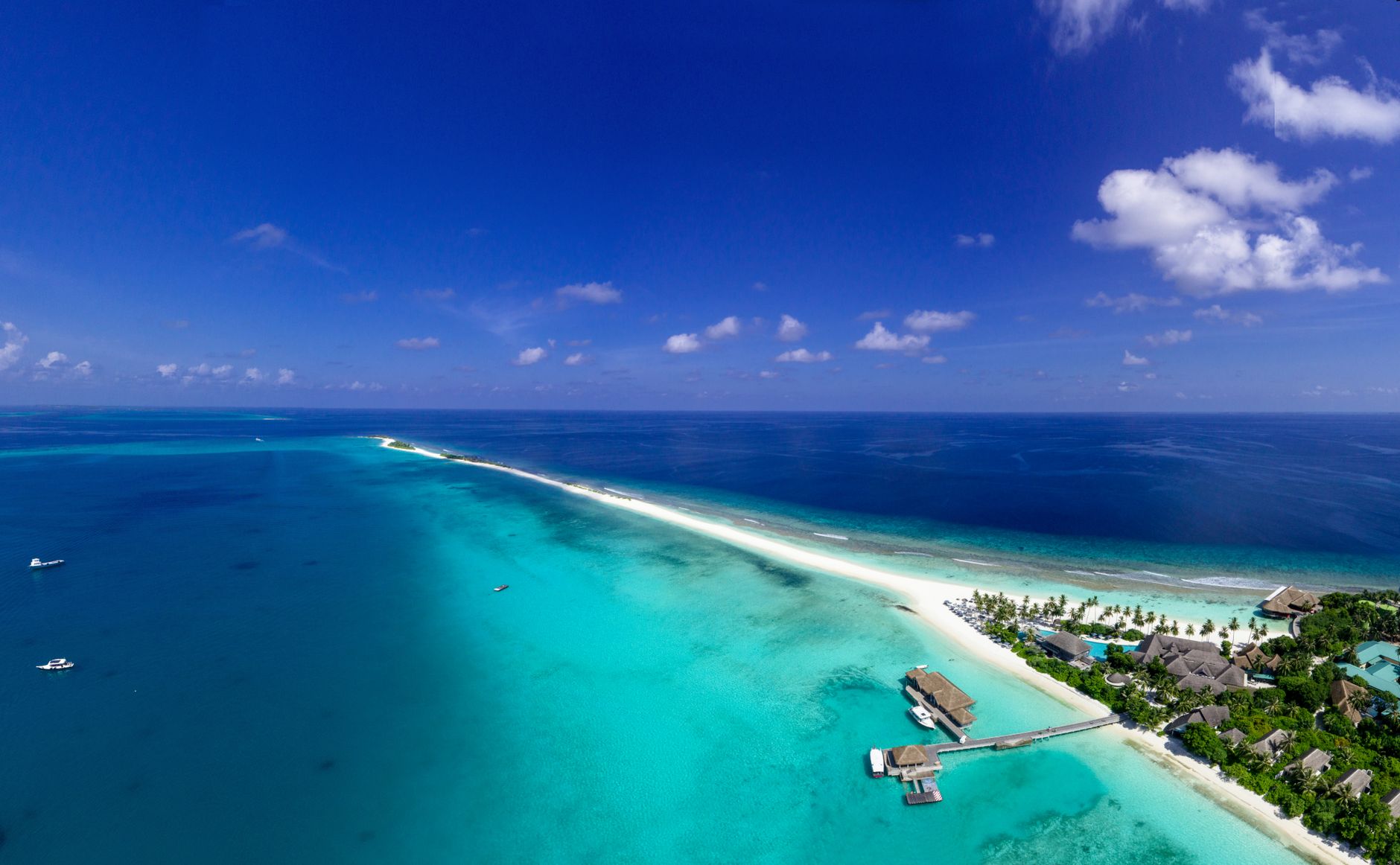
Drifting like an emerald droplet in the northern waters of the Maldives, Lhaviyani Atoll is celebrated by marine naturalists as the premier sea turtle capital of the Indian Ocean. At the northern tip of this pristine atoll lies Kuredu Island, home to the largest documented resident population of Green Sea Turtles (Chelonia mydas) in the entire Maldivian archipelago.
According to long-term photographic identification research conducted by the Olive Ridley Project (ORP), Kuredu’s house reef and surrounding underwater topography host an astonishing resident community of over 350 individual sea turtles.
The island features two world-class marine habitats side by side:
- The Kuredu Lagoon & House Reef: An expansive, sun-drenched shallow lagoon carpeted in lush seagrass beds (Thalassia hemprichii), where dozens of juvenile and sub-adult Green turtles graze in water just 1.5 to 3.5 meters deep.
- Kuredu Caves (The “Turtle Airport”): A breathtaking oceanic wall located along the southern reef drop-off, characterized by deep limestone overhangs and caverns between 8 and 22 meters depth where dozens of giant adult Green turtles rest on sandy ledges.
                         INDIAN OCEAN EQUATORIAL CURRENTS
                                    │  │  │
                                    ▼  ▼  ▼
       ┌─────────────────────────────────────────────────────────────┐
       │                 KUREDU ATOLL MARINE SANCTUARY               │
       │                                                             │
       │     [ Kuredu Caves / Turtle Airport ]   [ Outer Reef Wall ] │
       │   ═════════════════════════════════   ═════════════════════ │
       │   (Deep Overhangs & Sleeping Turtles)  (Pelagic Eagle Rays) │
       │                                                             │
       │          [ Kuredu Shallow Lagoon & Seagrass Beds ]          │
       │          ░░░░░░░░░░░░░░░░░░░░░░░░░░░░░░░░░░░░░░░░░░░░       │
       │          (300+ Resident Green Turtles in 1-3m Water)        │
       │                                                             │
       │   ───────────────────────────────────────────────────────   │
       │               Kuredu Island White Sand Spits                │
       └─────────────────────────────────────────────────────────────┘
The site earned its famous nickname, “The Turtle Airport”, because of the continuous, rhythmic traffic of sea turtles departing and landing on the cave ledges: at any given moment, turtles are either “taking off” from their cavern roosts to ascend to the surface for air, or “landing” back onto the ledges to resume their midday naps.

Maldives: Lhaviyani Atoll Sea Turtle & Manta Snorkeling Safari
Guided dhoni boat excursion with on-site marine biologist to Kuredu Caves, coral cleaning stations, and shallow lagoon feeding grounds.
Marine Biology & Foraging Ecology in Lhaviyani Atoll
The immense carrying capacity of Kuredu’s ecosystem is a testament to the symbiotic relationship between its vast benthic seagrass prairies and outer coral walls:
  SURFACE (Snorkeler with Mask & Snorkel) ~~~~~~~~~~~~~~~~~~~~~~~~~~~~~~~~~~~~~~~~
                                          │ (3-Meter Mandatory Standoff Buffer)
                                          ▼
  SHALLOW LAGOON & REEF CREST            🐢 [Chelonia mydas / Eretmochelys imbricata]
  (Depth: 1.5m - 5.0m)                    │ Grazing on Thalassia / hunting soft corals
                                          ▼
  KUREDU CAVES LIMESTONE LEDGES          ════════════════════════════════════════
  (Depth: 8.0m - 20.0m)                  "The Turtle Airport" Sleeping Hollows
1. The Green Sea Turtles (Chelonia mydas) of Kuredu Lagoon
Kuredu’s shallow lagoon is one of the few places in the Maldives featuring expansive, unbroken prairies of Sickle Seagrass (Thalassia hemprichii) and Paddle Grass (Halophila ovalis).
Green sea turtles are specialized herbivores. In Kuredu, juvenile and sub-adult turtles spend several hours each morning grazing on the tender, carbohydrate-rich basal shoots of the seagrass. This continuous grazing stimulates fresh, nutrient-dense new shoots, which in turn attract grazing herbivorous reef fish and juvenile marine organisms.
2. The Hawksbill Turtles (Eretmochelys imbricata) of the Outer Reef
While Green turtles dominate the lagoon and cave ledges, Hawksbill turtles forage along the sunlit upper slopes of Kuredu’s outer coral reef (depths of 2 to 8 meters). Hawksbills feed on soft corals, colonial tunicates, and encrusting sponges (Spheciospongia). Their raptor-like beaks allow them to reach deep into crevices between Pore Corals (Porites lutea) and Staghorn Corals (Acropora formosa), clearing away aggressive sponges that would otherwise smother reef-building coral polyps.
Symbiotic Cleaning Stations & Marine Mega-Fauna
Along the rim of Kuredu Caves, colossal coral heads function as active cleaning stations. Here, resident turtles stretch out their flippers and relax as Bluestreak Cleaner Wrasses (Labroides dimidiatus) and Surgeonfish (Acanthurus triostegus) clean dead skin and parasitic flatworms from their soft tissue.
Co-occurring marine species in Lhaviyani Atoll:
- Elasmobranchs: Resident Blacktip Reef Sharks (Carcharhinus melanopterus), Whitetip Reef Sharks (Triaenodon obesus), and gliding Spotted Eagle Rays (Aetobatus narinari).
- Pelagic Giants: During the northeast monsoon, Reef Manta Rays (Mobula alfredi) aggregate at nearby cleaning stations at Fushivaru Thila and Tinga Giri.
Detailed Bathymetry, Reef Zones & Snorkel Swim Routes
NORTH (Kuredu Lagoon)                SOUTH (Reef Crest)                     DEEP SOUTH (Kuredu Caves)
[ Shallow Seagrass Flats ]          [ Fringing Coral Garden ]              [ Undercut Caverns & Wall ]
      Depth 1.0-3.5m                         Depth 2.0-6.0m                         Depth 8.0-25.0m
            │                                      │                                       │
         vvvvvvvv                               ════════                                ════════
  (30+ Grazing Juveniles)                 (Hawksbills & Rays)                    ("The Turtle Airport")
                  KUREDU LAGOON SHORE SNORKEL SWIM ROUTE

  [ Kuredu Beachfront Steps (near Main Pool / Water Sports Center) ]
          │  Walk into calm, turquoise lagoon at mid-to-high tide
          ▼
  [ Shallow Sand Flat (0.8m - 1.5m) ]  --> Wade out past wave break; put on fins
          │  Swim 40m offshore toward the dark green seagrass beds
          ▼
  [ Core Seagrass Meadow (1.5m - 3.0m) ] --> 8 to 15 Green Turtles Grazing 🐢
          │  Float quietly on surface; maintain 3-meter mandatory buffer
          ▼
  [ House Reef Coral Crest (3.0m - 5.0m) ] --> Hawksbills & Blacktip Reef Sharks
          │  Gently drift west along the reef edge with the light current
          ▼
  [ Exit Safely onto the Kuredu Sandbank Beach ]
1. Kuredu House Reef & Lagoon (Depth: 1.0 to 4.0 meters)
- Characteristics: Completely sheltered, crystal-clear lagoon with expansive seagrass pastures.
- Wildlife Encounter: The easiest shore-entry snorkel in the Maldives. Step directly from the beach into waist-deep water and swim 30 meters to find dozens of Green sea turtles grazing peacefully on seagrass.
2. Kuredu Caves (“The Turtle Airport”) (Depth: 8.0 to 22.0 meters)
- Characteristics: Dramatic ocean-facing wall featuring deep limestone overhangs, hollows, and caverns along the atoll drop-off.
- Wildlife Encounter: The ultimate scuba and deep freediving encounter. Giant Green turtles measuring over 1.2 meters rest stacked on sandy cave ledges. Watch them take off into blue water to breathe before gliding back down to land on their favorite sleeping spots.
3. Kuredu Express & Corner (Depth: 5.0 to 30.0 meters)
- Characteristics: An action-packed channel drift dive exposed to incoming oceanic currents.
- Wildlife Encounter: Schools of grey reef sharks, eagle rays, giant trevallies, and Napoleon wrasses (Cheilinus undulatus) patrolling the deep channel edge.
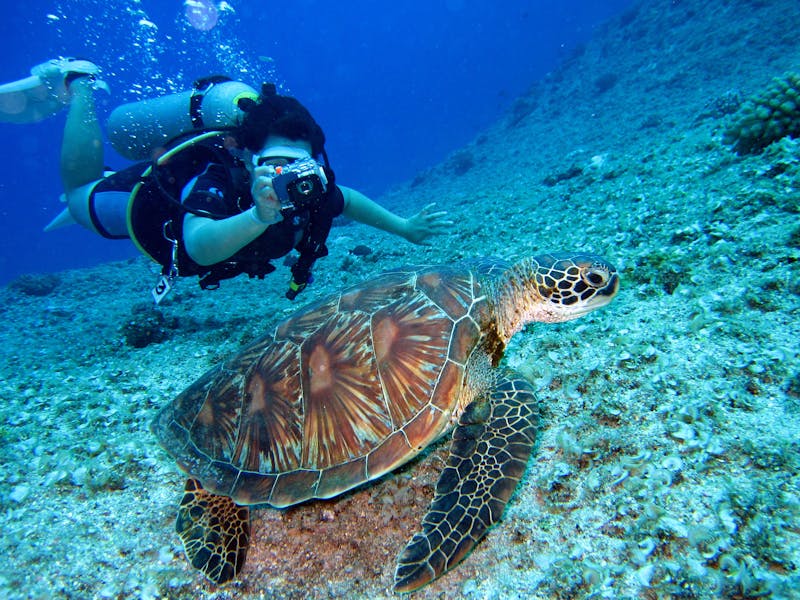
Lhaviyani Atoll Luxury Private Speedboat Snorkel Safari
Private speedboat charter covering Kuredu Caves, Fushivaru Manta point, deserted sandbank picnic, and private marine biologist guide.
Environmental Laws, EPA Protections & Codes of Conduct
Sea turtles are afforded absolute legal protection across the Republic of Maldives:
Maldives EPA & State of the World’s Sea Turtles (SWOT) Monitoring Standards:
- Complete Legal Protection: Under the Maldives Environmental Protection Act 1995, all 7 species of marine turtles are fully protected. Catching, hunting, killing, trading, or harming turtles—or harvesting their eggs—carries severe criminal fines of up to 500,000 MVR (~$32,500 USD).
- Olive Ridley Project Code of Conduct: Maintain a strict [3-meter (10-foot) distance](/ethics-and-safety/) at all times. Never touch the carapace or flippers. Touching transfers harmful bacteria and strips the protective epidermal coating.
- No Flash Photography in Caves: Using electronic strobe flashes or high-intensity video torches inside the dark overhangs of Kuredu Caves is strictly forbidden as it blinds and panics resting reptiles.
- Clear Vertical Surfacing Corridors: Never hover directly above a resting or grazing turtle; always maintain an open vertical exit path so the turtle can ascend effortlessly to breathe.
Seasonality, Water Temperatures & Visibility
Month:      Jan  Feb  Mar  Apr  May  Jun  Jul  Aug  Sep  Oct  Nov  Dec
Sighting:  [==== Peak Season 99% ====] [======== High Season 95% ========] [== Peak 99% ==]
Conditions: Iruvai Dry Monsoon (Flat Calm) Hulhangu Monsoon (Plankton/Rain) Iruvai Dry
Water Temp: 28°C 28°C 29°C 29°C 30°C 29°C 28°C 28°C 28°C 28°C 29°C 28°C
Visibility:  30m  35m  40m  40m  25m  20m  20m  20m  25m  25m  30m  30m
- Iruvai Dry Monsoon (November through April): The peak tourist season in the Maldives. Characterized by cloudless blue skies, gentle northeast breezes, flat calm lagoons, and phenomenal underwater visibility (30 to 40+ meters).
- Hulhangu Wet Monsoon (May through October): The southwest monsoon brings occasional tropical squalls and higher plankton concentrations. While visibility in the open ocean can dip to 20 meters, turtle sightings in the sheltered Kuredu lagoon remain virtually 100% year-round because the resident turtles do not migrate.
Complete Logistics: Getting to Kuredu Island
[ International Flight to Velana International Airport (MLE) ]
                           │
             Trans Maldivian Airways (TMA)
                  Seaplane (40 min)
                           ▼
          [ KUREDU ISLAND RESORT WATER JETTY ]
1. International Arrival in Malé
- Fly into Velana International Airport (MLE) in Malé on any major international carrier (Emirates, Qatar Airways, Singapore Airlines, British Airways).
2. Seaplane Transfer to Kuredu Island
- Upon clearing customs, you will be escorted to the Trans Maldivian Airways (TMA) Seaplane Terminal.
- Board a scenic twin-otter seaplane for the breathtaking 40-minute flight north over the turquoise atolls directly to Kuredu Island.
- The seaplane lands on the water right beside Kuredu’s arrival jetty, where golf buggies transfer you to your villa.
Realistic Pricing Benchmarks & Verified Local Operators
| Service / Item | USD ($) | Notes / Inclusions |
|---|---|---|
| House Reef Shore Snorkeling | $0.00 (Free) | Unlimited walk-in access for resort guests |
| Snorkel Gear Rental (Mask, Fins, Snorkel) | $12.00 / day | Complimentary on All-Inclusive packages |
| Guided House Reef Turtle Snorkel Tour | $45.00 | 1.5 hours with resident marine biologist |
| Kuredu Caves & House Reef Boat Excursion | $75.00 – $95.00 | 2-3 hours aboard traditional wooden dhoni |
| Private Luxury Speedboat Charter | $550.00 – $750.00 | Up to 4 pax; custom itinerary & refreshments |
| Single Guided Scuba Boat Dive | $85.00 – $110.00 | Includes tank, weights, boat transfer & guide |
Verified Local PADI 5-Star Operators
- Prodivers Maldives (Kuredu Headquarters)
- Accreditation: PADI 5-Star Career Development Center (CDC) #8512
- Website: https://www.prodivers.com | Email: info@prodivers.com | Phone: +960 662 0343
- Location: Kuredu Island Resort, Lhaviyani Atoll
- Highlights: One of the largest and most prestigious dive centers in the Maldives. Operates dedicated daily snorkel and dive dhonis to Kuredu Caves and surrounding atoll channels.
- Kuredu Marine Biology Center (Olive Ridley Project)
- Accreditation: Official Marine Research & NGO Station
- Website: https://oliveridleyproject.org | Email: maldives@oliveridleyproject.org
- Location: Eco-Center, Kuredu Resort
- Highlights: Hosts resident marine biologists conducting photo-identification research, turtle rescue, and daily educational guest briefings.
- Hurawalhi Ocean Watersport & Dive Center
- Accreditation: PADI 5-Star Dive Center #25119
- Website: https://www.hurawalhi.com | Email: dive@hurawalhi.com | Phone: +960 662 2000
- Location: Hurawalhi Island Resort, Lhaviyani Atoll
- Highlights: High-end luxury dive center offering private speedboats to Kuredu Caves and expert-led marine biology safaris.
Responsible Snorkeling & Wildlife Etiquette
                    RESPONSIBLE MALDIVIAN ENCOUNTER PROTOCOLS

     Snorkeler Floating Silently on Surface (Horizontal Trim)
     ~~~~~~~~~~~~~~~~~~~~~~~~~~~~~~~~~~~~~~~~~~~~~~~~~~~~~~~~
                                │
                                │  3 METERS (10 FEET) MINIMUM BUFFER
                                │  NO TOUCHING / NO FEEDING
                                ▼
                     🐢 [Green Sea Turtle]
                                │
                                ▼
        [ Thalassia Seagrass Beds in 2m Water ] vvvvvvvvvvvvvv
- Never Touch the Shell or Flippers: Physical contact triggers panic in sea turtles and strips away the protective antibacterial layer on their scutes.
- Do Not Surround or Block a Turtle: When observing turtles grazing on seagrass in the lagoon, stay to one side. Never encircle the turtle with multiple swimmers.
- No Chasing When a Turtle Swims Away: If a turtle decides to glide into deeper water, let it go. Chasing induces severe cardiovascular stress.
- Use mineral zinc sunscreen : Protect the fragile coral reef by avoiding toxic chemical sunscreens containing oxybenzone.
Red Flags & What to Avoid at Kuredu Caves
Red Flags & What to Avoid at Kuredu Caves & House Reef (Lhaviyani Atoll)
Independent critique, common tourist traps, and local marine compliance advisories.
At Kuredu Caves & House Reef (Lhaviyani Atoll), underwater clarity is highest during Morning 08:00-11:30 (20–40m). By late morning, coastal winds kick up chop and tourist activity stirs bottom sediments, cutting visibility significantly. Resident sea turtles typically retreat to deeper resting ledges once human traffic peaks.
Shore access at Kuredu Caves & House Reef (Lhaviyani Atoll) has an official fee of $0.00 USD. Independent beach touts often approach visitors claiming private guides or expensive package wristbands are required. Verify official ticket counters and bring your own sanitized snorkel gear to avoid paying 300% rental markups.
Wild sea turtles at Kuredu Caves & House Reef (Lhaviyani Atoll) are protected by national marine sanctuaries. Minimum 3-meter distance from turtles. Touching, cornering, riding, or feeding turtles carries severe statutory wildlife fines, immediate park ejection, and potential legal prosecution under Maldives conservation laws.
Chemical sunscreens containing oxybenzone, octinoxate, and octocrylene poison fragile coral polyps and marine turtle nursery habitats. Use exclusively certified 100% non-nano zinc oxide mineral sunscreens or wear UPF 50+ rashguards to prevent sunscreen wash-off in the protected reef zone.
Frequently Asked Questions & Direct Choice Field Guide
Guided Tour vs Independent Shore Snorkeling in Kuredu Caves — Which should you book?
Independent shore snorkeling (Free public entry) is the primary access method at Kuredu Caves, but you should hire a licensed local guide or marine center divemaster on-site if you are unfamiliar with local tidal rips and underwater reef navigation.
Certified local guides charge approximately $15–$25 USD and dramatically increase your encounter rate while keeping you safely clear of delicate living coral.
Early Morning vs Midday Snorkeling — When is turtle sighting probability highest?
Go during Morning 08:00-11:30, which delivers an optimal 98% sighting probability and crystal 20–40m underwater visibility before offshore trade winds churn bottom sediments and tourist crowds arrive.
After 11:00 AM, heavy boat traffic and hundreds of recreational swimmers stir up fine silt, reducing underwater clarity by up to 50% and driving grazing turtles into deeper offshore trenches.
Peak Season (November, December, January) vs Shoulder Months — When are water conditions best?
Visit during November, December, January for peak feeding activity, minimal rainfall, and warm sea temperatures ranging from 27°C to 30°C.
While resident sea turtles inhabit Kuredu Caves year-round, booking morning excursions during peak months ensures calm surface conditions, though reserving tour slots 2–3 weeks ahead is essential to avoid sold-out capacity limits.
What are the statutory wildlife distance rules and legal penalties in Maldives?
Swimmers must maintain a strict minimum 3-meter (10-foot) buffer from all sea turtles at all times under Maldives marine conservation laws.
Touching, riding, pursuing, or cornering a turtle is a serious wildlife violation carrying steep statutory fines, immediate ejection from the marine sanctuary, and potential criminal prosecution. Always float neutrally with your arms crossed across your chest and allow turtles an unobstructed 45-degree surfacing corridor to breathe.
Where do Kuredu Caves turtle tours depart from, and how do you reach the reef?
Most verified excursions depart directly from local harbor docks or designated beach kiosks near MLE airport, with reef access centered around GPS coordinates 5.55, 73.4667.
If traveling independently by rental car or taxi, arrive at least 30 minutes before your scheduled departure to secure parking and complete mandatory marine sanctuary registration.