Biological Profile & Identification
The Flatback Sea Turtle (Natator depressus) is the most geographically restricted and biologically distinct of all seven living marine turtle species (including Green and Loggerhead ). Unlike the other six chelonians that migrate across entire ocean basins and cross international borders, the Flatback is strictly endemic to the northern continental shelf of Australia and shallow bordering waters of southern Papua New Guinea.
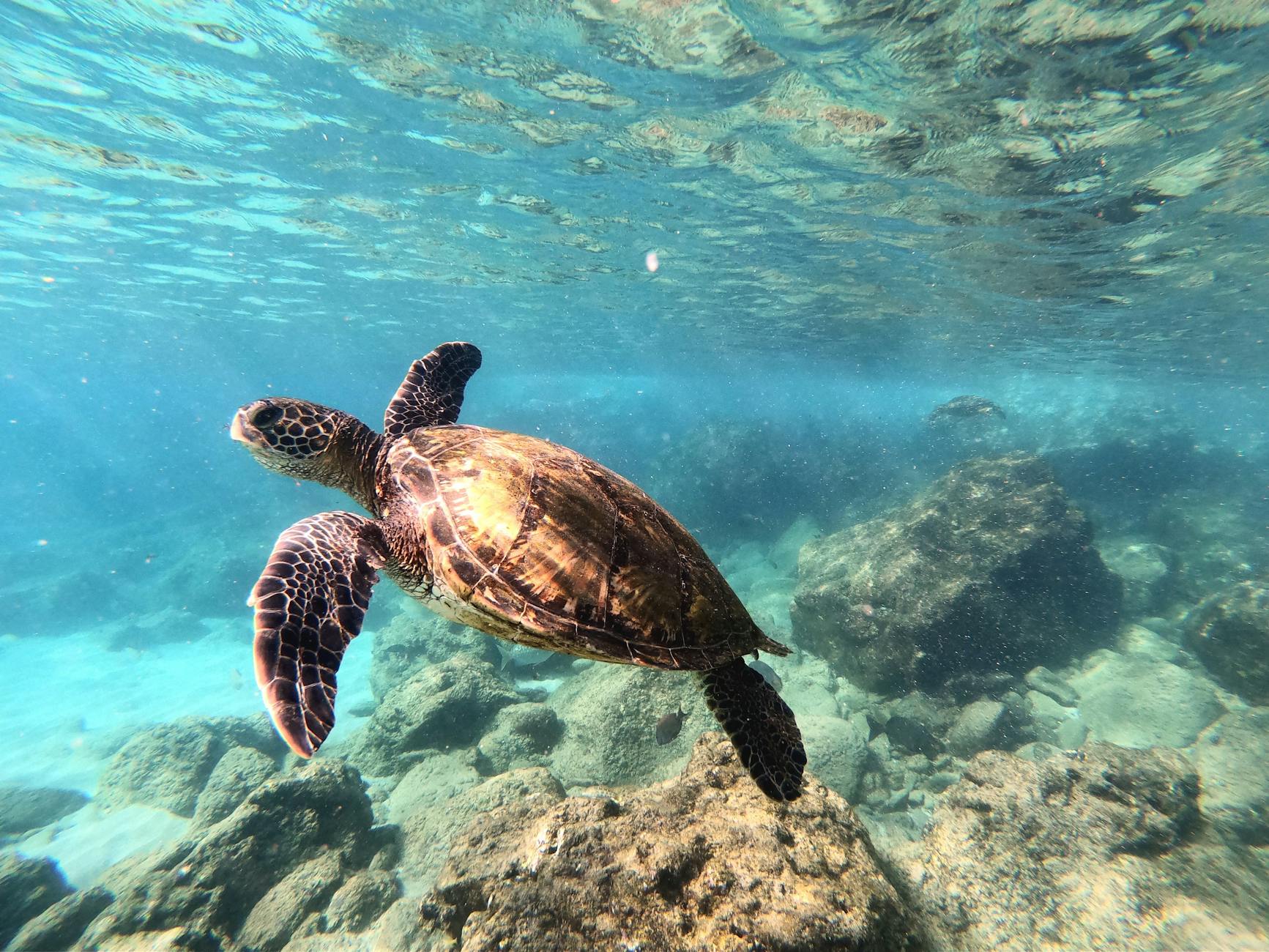
Its common and scientific names (Natator = swimmer, depressus = flattened) describe its uniquely flat, low-domed carapace with upturned lateral edges that resemble the rim of a shallow plate.
          FLATBACK SEA TURTLE (Natator depressus) ANATOMICAL MARKERS
═════════════════════════════════════════════════════════════════════════
  [ Head ]       ──► Single pair of prefrontal scales, wide rounded snout
  [ Carapace ]   ──► Extremely flat, thin smooth scutes with upturned edges
  [ Coloration ] ──► Pale olive-grey to pale greyish-khaki with cream margins
  [ Flippers ]   ──► Fleshy, heavily padded paddles with single claw
═════════════════════════════════════════════════════════════════════════
Anatomical Characteristics
Identifying an Australian Flatback in the water involves checking four distinct morphological markers:
- Depressed, Thin Carapace: The carapace lacks the high arch of green or loggerhead turtles. The keratinous scutes are remarkably thin and smooth, covered with a waxy, fleshy epidermal layer. The outer margins of the shell curl upward gently.
- Prefrontal Head Scales: Like the Green turtle, the Flatback has a single pair of elongated prefrontal scales between the eyes, but possesses a wider, flatter cranium with dark rounded eyes.
- Pale Olive-Khaki Coloration: The dorsal shell and flippers display a muted olive-grey, pale khaki, or creamy-tan coloration with pale yellow plastron (underside).
- Heavy Fleshy Flippers: The front and rear flippers are noticeably thicker and fleshier than those of pelagic species, perfectly adapted for sculling through turbid, tide-swept continental shelf channels.
Adult Size, Weight, and Growth Rates
Adult Flatbacks are medium-sized marine turtles, measuring between 80 and 95 centimeters in straight carapace length (SCL) and weighing between 70 and 90 kilograms. Females are marginally larger than males.
Unlike other species, Flatback shells are susceptible to damage because the keratin layer is exceptionally thin; even light scrapes against sharp coral or boat hulls can penetrate to the vascularized bone beneath.
The Non-Pelagic Life Cycle: A Unique Evolutionary Trait
The single most extraordinary biological adaptation of Natator depressus is the complete absence of a pelagic “lost years” phase:
                  FLATBACK VS. PELAGIC TURTLE LIFE CYCLE
  ┌────────────────────────────────────────────────────────────────────────┐
  │ OTHER 6 SPECIES:                                                       │
  │ Hatch Sand ──► Open Ocean Currents (10–15 Years) ──► Coastal Recruitment│
  ├────────────────────────────────────────────────────────────────────────┤
  │ FLATBACK (Natator depressus):                                          │
  │ Hatch Sand ──► Shallow Turbid Coastal Shelf (0 Pelagic Years!)         │
  └────────────────────────────────────────────────────────────────────────┘
- Giant Eggs and Hatchlings: Female Flatbacks lay the largest eggs relative to their body size of any marine turtle (roughly 50–55mm in diameter), producing giant hatchlings measuring over 60mm in length and weighing up to 45 grams (nearly double the size of green turtle hatchlings).
- Coastal Nursery Grounds: Upon reaching the surf, hatchling flatbacks do not swim into open-ocean gyres. Instead, they remain permanently within shallow, muddy, highly productive continental shelf waters (depths under 50 meters), feeding on macro-plankton, larval crabs, and coastal jellyfish.
- Resistance to Pelagic Predators: Their large initial size at hatching provides immediate defense against small reef fish and seabirds, allowing them to skip oceanic drift entirely.
Diet & Benthic Feeding Mechanics
Flatback sea turtles are carnivorous benthic generalists. They feed primarily on soft-bodied, slow-moving invertebrate organisms across turbid coastal bays and muddy seabed channels:
- Soft Corals & Sea Pens: Grazing on sea pens (Pennatulacea) and soft octocorals in quiet sub-tidal waters.
- Holothurians (Sea Cucumbers): Consuming large benthic sea cucumbers on sand and silt bottoms.
- Jellyfish & Salps: Opportunistic feeding on pelagic scyphozoans (Catostylus mosaicus) during seasonal blooms.
- Mollusks & Prawns: Crushing shallow-water bivalves, crabs, and mantis shrimp.
Where to See Flatback Sea Turtles in the Wild
Because Flatbacks do not migrate outside of northern Australasia, they can only be observed in specific northern Australian marine parks:
| Sanctuary Spot | Location | Peak Encounter Window | Access Mode |
|---|---|---|---|
| Ningaloo Marine Park | Exmouth / Coral Bay, Western Australia | October – March | Shore snorkel & boat charter |
| Bare Sand Island | Darwin / Fog Bay, Northern Territory | May – August (Nesting) | Eco-charter tour from Darwin |
| Crab Island / Torres Strait | Queensland / Gulf of Carpentaria | Year-Round (World’s largest rookery) | Remote research permits only |
| Cape Domett / Cambridge Gulf | Kimberley Region, Western Australia | July – October | Dedicated expedition charters |
Conservation Status & Environmental Threats
Tracked globally by the State of the World’s Sea Turtles (SWOT) and Sea Turtle Conservancy , the IUCN Red List categorizes the Flatback as Data Deficient (DD) due to the difficulty of monitoring nesting aggregations across remote, crocodile-inhabited northern Australian beaches. Under Australian federal law (EPBC Act), the Flatback is listed as Vulnerable and strictly protected.
Primary Survival Threats:
- Trawl Bycatch: Benthic bottom-trawl fisheries operating on the continental shelf historically caught adult flatbacks. The mandatory introduction of Turtle Excluder Devices (TEDs) has drastically reduced mortality.
- Feral Predator Nest Depredation: Feral pigs, wild dogs, and native varanid monitor lizards dig up unprotected egg clutches on mainland beaches.
- Industrial Coastal Development: Harbor dredging, LNG facilities, and coastal lighting disorientation in Western Australia and Queensland.